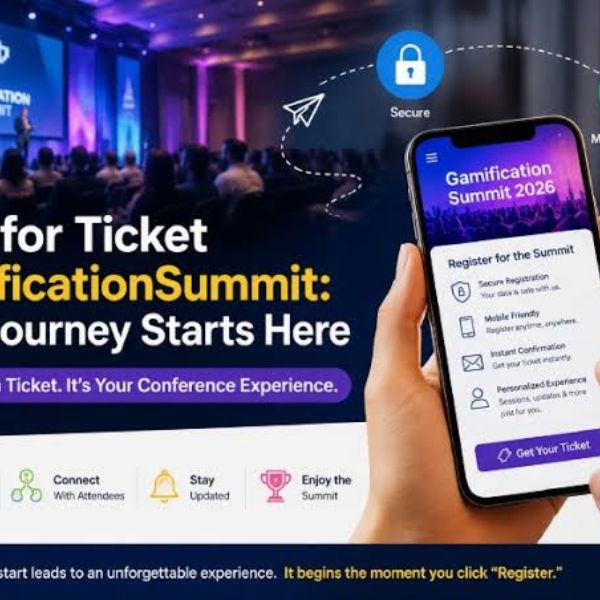
Employee engagement is becoming a major challenge for companies that need people to stay motivated, work together, and adapt to constant change.
The concept behind Xendit Gamification Summit Work explores how workplace gamification can turn everyday tasks into more engaging experiences.
By using game-inspired challenges, progress tracking, recognition, and teamwork, organizations can make work feel more rewarding without losing sight of business goals.
Xendit Gamification Summit Work: Quick Overview
| Detail | Information |
| Topic | Workplace gamification and employee engagement |
| Company associated with the topic | Xendit, a financial technology company |
| Industry | Fintech and digital payments |
| Main concept | Applying game mechanics to workplace activities |
| Potential features | Challenges, progress tracking, recognition, and collaboration |
| Intended audience | Employees, HR teams, managers, and business leaders |
| Primary objective | Improve motivation, participation, and teamwork |
| Program launch date | Not independently verified |
| Official program results | Not independently verified |
Important context: Publicly verifiable details about a specific initiative called “Xendit Gamification Summit Work,” including its launch date, internal technology stack, and measured outcomes, are not established here. The article therefore distinguishes general workplace gamification practices from claims that would require direct confirmation from Xendit. The framework below explains how such a program could work without presenting hypothetical features or results as verified company facts.
Why Traditional Employee Engagement Was Starting to Fail
Traditional employee engagement methods often depend on annual surveys, occasional awards, team lunches, and performance reviews. These activities can help employees feel valued, but they may not provide enough feedback during daily work. When employees cannot see how their contributions support a larger goal, routine tasks can become less meaningful. Remote and hybrid teams may face additional challenges because they have fewer informal opportunities to connect with colleagues and managers.
A better approach combines regular feedback with clear goals and meaningful recognition. Workplace gamification can help by making progress visible and giving employees more opportunities to participate. However, points and prizes alone cannot solve poor management, excessive workloads, or unclear expectations. A successful engagement strategy must address these underlying issues first.
What Is Xendit Gamification Summit Work?
The term Xendit Gamification Summit Work combines three ideas: Xendit, gamification, and workplace engagement. Gamification means applying game-inspired elements to activities that are not games, such as employee training, professional development, project collaboration, and internal learning.
Xendit is a financial technology company focused on digital payment infrastructure in Southeast Asia. Its official website describes a business that helps companies simplify payments and highlights values such as treating people well and building an inclusive culture.
These public details provide useful context for discussing workplace innovation at the company.
However, publicly available information does not establish the exact phrase as the official name of a confirmed Xendit employee program or summit. Therefore, it is more accurate to examine the concept as a workplace gamification framework than to claim that Xendit implemented specific features or achieved particular results without supporting evidence.
The Real Goal Behind the Program
The main goal of a workplace gamification strategy is to make useful behavior easier to understand, practice, and repeat. Instead of telling employees to improve teamwork, a company can create structured activities that encourage knowledge sharing, peer support, and cross-team problem-solving.
For a fintech organization, these activities could focus on product learning, customer service quality, secure development practices, and faster onboarding. Employees might complete learning modules, contribute to team projects, or help colleagues understand a new process. These are examples of possible applications, not confirmed features of an official Xendit program.
A well-designed initiative should also support business priorities without reducing people to performance scores. Employees need autonomy, fair treatment, and meaningful feedback. The strongest approach connects individual development with shared goals, helping employees understand why their work matters rather than simply rewarding them for completing more tasks.
How Xendit Designed the Gamification Framework
A practical framework for workplace gamification begins with a clear problem. Leaders should identify whether they want to improve training completion, cross-team communication, employee recognition, or another measurable outcome. They can then choose game mechanics that support that objective.
For example, an organization might combine short learning activities, team missions, skill milestones, and peer recognition in one employee experience. Each activity should have clear rules and a reasonable time commitment. Managers should explain how progress is recorded and ensure that employees understand how rewards are earned.
The following elements illustrate how such a framework could operate. They should be understood as recommended design ideas rather than verified components of Xendit’s internal systems.
Daily Wins
Daily wins are small achievements that help employees recognize progress. Examples include finishing a training lesson, documenting a useful solution, or completing a project milestone. A simple progress indicator can make these achievements visible without creating unnecessary competition.
Recognition should focus on meaningful contributions rather than the number of hours spent online. Employees who solve a difficult problem or help a teammate may create more value than someone who completes many easy tasks. A balanced system recognizes quality, learning, and cooperation alongside task completion.
Collaborative Quests
Collaborative quests are team-based challenges with a shared objective. A product team, for example, could work together to improve an onboarding guide, identify confusing instructions, or create a resource for new employees.
This structure encourages employees to exchange knowledge and learn from colleagues outside their immediate roles. Team rewards can also reduce the pressure associated with individual rankings. To keep the experience fair, managers should define each person’s responsibilities and recognize contributions from employees with different skills and levels of experience.
Smart Challenges
Smart challenges connect workplace activities with specific development goals. A new employee might complete a sequence of product lessons, while an experienced team member could lead a knowledge-sharing session or mentor a colleague.
Challenges should be realistic, accessible, and relevant to an employee’s role. Requiring everyone to complete the same task may disadvantage people with different responsibilities or schedules. A better design offers several ways to demonstrate the same skill, allowing employees to participate without sacrificing the quality of their regular work.
Progression System
A progression system shows employees how they move from beginner-level activities toward more advanced skills. It could include learning milestones, achievement badges, or certificates linked to completed training.
Progression should reflect actual development rather than time spent collecting points. For instance, employees could unlock an advanced learning module after demonstrating knowledge of a new process. Transparent criteria help employees understand what comes next and prevent the system from feeling arbitrary. Managers should also review milestones regularly to ensure that the rewards remain relevant to professional growth.
Why Gamification Works So Well in Fintech Companies
Fintech companies operate in an environment where accuracy, customer trust, security, and continuous learning are important. Employees may need to understand payment workflows, investigate failed transactions, follow compliance procedures, and respond to changing technical requirements. Well-designed learning challenges can make these topics more interactive and easier to practice.
Gamification can also support teamwork across engineering, operations, customer support, and product management. A simulated payment issue, for example, could help employees understand how one team’s decisions affect another team’s work. These exercises make complex processes easier to discuss without exposing real customer data or disrupting live services.
Research supports a measured view of the approach. A 2025 systematic review examined 56 studies on games and gamification in business and training, identifying applications in learning, collaboration, and employee engagement. The authors also highlighted the need for stronger evidence about long-term effects and ethical design.
Gamification is therefore a useful option, not a guaranteed solution.
The Technology Stack That Powered the Experience
No verified technical specification for a dedicated Xendit Gamification Summit Work platform is established in the sources discussed here. Still, a company building a similar employee experience would typically need several connected components.
These could include an employee portal, a learning management system, a task or project platform, a notification service, and an analytics dashboard. Integration with existing workplace tools would reduce the need for employees to switch between multiple applications. A central interface could display learning progress, team challenges, recognition, and upcoming milestones.
Security would be especially important in a fintech environment. Access controls, data minimization, audit logs, and clear retention rules would help protect employee information. The system should collect only the data needed to run the program. Employee performance information must not become a hidden monitoring tool, and any AI-based recommendations should be explainable and subject to human review.
Step-by-Step Rollout Strategy
A company planning a gamified employee experience should start with a limited pilot rather than launching a complex program across the entire organization. A small trial helps leaders test whether the activities are useful, understandable, and compatible with normal workloads.
A practical rollout could follow these steps:
- Identify the problem: Choose one priority, such as onboarding completion or cross-team learning.
- Record a baseline: Measure current performance before introducing the new system.
- Design simple activities: Create challenges that encourage the desired behavior.
- Test with a small team: Gather feedback from employees in different roles.
- Review the results: Compare outcomes with the baseline and examine unintended effects.
- Improve the design: Remove confusing rules and adjust rewards that encourage unhealthy competition.
- Expand carefully: Introduce the program to additional teams only when the pilot shows useful results.
A pilot lasting four to eight weeks could provide an initial view of participation and usability, although longer observation may be needed to assess retention, employee well-being, or lasting behavior change. This is a suggested timeline, not a reported Xendit rollout schedule.
How Gamification Improved Employee Motivation
Gamification can support employee motivation by providing clear goals, visible progress, and timely feedback. Employees often benefit from understanding what they have accomplished and which skills they can develop next. Recognition from managers and peers can also help people feel that their contributions matter.
However, it would be misleading to say that Xendit Gamification Summit Work demonstrably improved employee motivation without independently verified employee surveys or performance data. A credible assessment would compare employee feedback before and after the program and examine whether changes lasted beyond the initial excitement.
Companies should also distinguish between intrinsic and extrinsic motivation. Intrinsic motivation comes from interest, mastery, and a sense of purpose. Extrinsic motivation comes from external rewards, such as points or prizes. A balanced system uses external incentives to support meaningful work rather than making employees dependent on constant rewards.
The Role of AI and Smart Personalization
Artificial intelligence could make workplace gamification more relevant by adapting learning recommendations to employee needs. For example, a training platform might suggest an introductory course to a new employee and a more advanced module to someone who has already demonstrated the required skills.
AI could also help managers identify training topics that many employees find difficult. Aggregated results may reveal that a process needs clearer instructions or that a team would benefit from additional support. These insights are most useful when they help improve the work environment rather than rank employees automatically.
There is no verified evidence here that a specific AI system powered Xendit Gamification Summit Work. Any organization considering this technology should disclose how recommendations are generated, limit access to personal data, and provide a way to challenge inaccurate assessments. Human judgment should remain central to decisions affecting employee opportunities or performance reviews.
Challenges the Team Faced Along the Way
Workplace gamification can create several problems when the design is not carefully planned. Employees may view the system as childish, feel pressured to compete, or question why some activities earn more points than others. These concerns are especially likely when the rules are unclear or rewards do not reflect meaningful contributions.
Another risk is rewarding easily counted behavior instead of valuable outcomes. If employees receive points for closing support tickets quickly, they may rush responses at the expense of customer satisfaction. Similarly, a leaderboard based on completed tasks may disadvantage employees who handle complex work that takes longer.
Organizations can reduce these risks by testing the system with employees, reviewing reward criteria, and tracking quality alongside quantity. Participation should be accessible to people with disabilities, different work schedules, and different levels of technical experience. Gamification should make work better, not add another layer of pressure.
Measuring Success Metrics and Real Outcomes
A credible employee engagement program needs measurable objectives. Before a pilot begins, managers should document current performance, define the expected change, and decide how results will be evaluated. Without a baseline, it is difficult to determine whether gamification produced an improvement or whether other factors caused the change.
Useful metrics include:
| Metric | What it measures |
| Participation rate | The share of eligible employees who take part |
| Training completion | Whether employees finish assigned learning activities |
| Knowledge retention | Whether employees remember and apply what they learned |
| Collaboration | Contributions to shared projects and knowledge resources |
| Employee engagement | Survey responses about motivation and connection |
| Work quality | Accuracy, customer outcomes, or error rates |
| Employee well-being | Workload, stress, and perceptions of fairness |
Companies should also examine differences between teams and employee groups. Higher participation does not automatically mean better engagement, and a short-term increase in activity does not prove a lasting improvement. Since verified before-and-after figures for Xendit Gamification Summit Work have not been established here, specific percentage gains should not be presented as actual results.
How the Program Helped Reduce Burnout
Gamification may support employee well-being when it helps people recognize progress, receive timely feedback, and connect with colleagues. Small milestones can make complex projects feel more manageable, while team challenges can encourage employees to ask for help instead of struggling alone.
Nevertheless, gamification is not a proven substitute for addressing burnout at its source. Excessive workloads, poor management, unclear roles, and limited recovery time require direct organizational action. Adding challenges, badges, and leaderboards to an already overloaded schedule can make the problem worse.
A responsible approach makes activities optional where possible, keeps them within normal working hours, and avoids rewarding employees for working late. Managers should monitor workload and employee feedback alongside engagement metrics. The objective is a healthier working environment, not a more entertaining way to demand extra effort.
Lessons Other Companies Can Learn From Xendit
Organizations exploring the idea behind Xendit Gamification Summit Work can draw practical lessons from established workplace gamification research. The most useful starting point is to connect game mechanics with a real organizational need and test whether they help employees perform meaningful tasks.
Research reviews identify potential applications in employee training, motivation, knowledge retention, and collaboration, while also pointing to gaps in evidence and implementation challenges.
These findings support a careful, evidence-based approach rather than assuming that every gamified system will succeed.
Keep Participation Natural
Employees should understand how activities fit into their normal responsibilities. Short, relevant challenges are more practical than complicated systems that require constant attention. Participation should feel useful rather than mandatory entertainment.
Reward Meaningful Behavior
Recognize high-quality work, learning, problem-solving, and helpful collaboration. Avoid rewarding raw activity counts when they can encourage rushed work or unfair comparisons.
Prioritize Collaboration
Team-based activities can strengthen relationships and encourage knowledge sharing. Provide multiple ways for employees to contribute so that quieter team members and people in different roles receive fair recognition.
Listen Constantly
Collect feedback throughout the pilot, not just at the end. Short surveys, interviews, and anonymous suggestions can reveal whether employees find the system motivating, confusing, or stressful.
Focus on Experience, Not Just KPIs
Performance indicators matter, but they do not tell the whole story. Consider employee confidence, fairness, learning quality, and workload when deciding whether to continue a program.
The Future of Workplace Gamification
Workplace gamification is likely to evolve alongside AI-assisted learning, digital collaboration tools, and more personalized employee development.
Future systems may recommend training based on demonstrated skills, create simulations for complex work scenarios, and help teams track shared goals more clearly.
Conclusion
Xendit Gamification Summit Work is a useful topic for exploring how game-inspired design could make workplace learning, recognition, and collaboration more engaging.
However, the exact program name, internal technology, and claimed performance improvements should not be treated as confirmed facts without reliable evidence.

Humair is the founder of PeakMagzine.com and a seasoned digital strategist with over 15 years of SEO experience. He specializes in creating high-quality, optimized content that drives organic traffic, improves search rankings, and helps brands grow their online presence effectively.
