
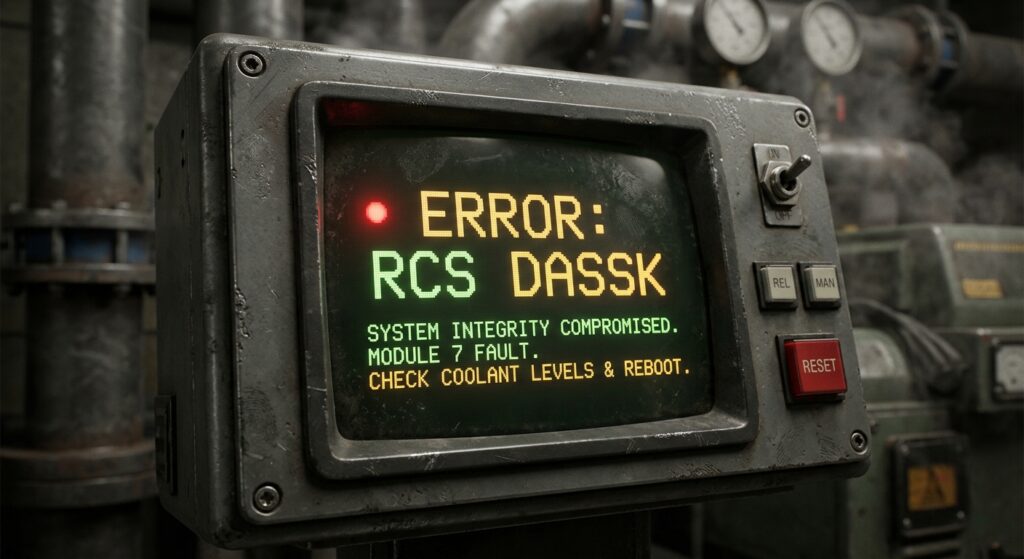
Encountering an unfamiliar error message can be frustrating, especially when it interrupts an application, website, software installation, or online service. If you have searched for error RCSDASSK, you may be looking for a clear explanation of what triggered the message and how to resolve it. However, understanding this error requires an important first step: identifying where it appears and which application or system displays it.
RCSDASSK is not a widely documented error code with a universally established definition in major public technical references. Therefore, it would be misleading to claim that it always indicates a network failure, corrupted file, security problem, or software malfunction. The correct explanation depends on the product, the surrounding error message, and the circumstances in which it occurs.
In this guide, you will learn what is currently known about error RCSDASSK, how to investigate its possible causes, which troubleshooting steps to try, and when to contact technical support. These practical recommendations will help you investigate the problem without risking your files, device security, or account information.
What Is Error RCSDASSK?
Error RCSDASSK is an identifier that some users may encounter while using a digital service or software environment. However, without a verified connection to a particular application, operating system, website, or device, its exact meaning cannot be established reliably. Error codes are often created by individual developers and service providers, which means the same-looking identifier may have different meanings across unrelated systems.
For example, Windows, web browsers, cloud platforms, mobile applications, and online gaming services each use their own methods to report problems. Some codes refer to specific technical failures, while others are internal identifiers intended to help support teams locate an event in diagnostic logs. Consequently, the appearance of an unfamiliar code does not automatically mean that your computer is damaged or your personal information is at risk.
The most useful starting point is to record the exact message and identify the software that displays it. Note whether error RCSDASSK appears during login, installation, startup, a payment attempt, or another activity. This context can help narrow down the investigation and prevent unnecessary troubleshooting.
It is also important to distinguish a confirmed explanation from an unverified online claim. Unless the software provider documents RCSDASSK or a reliable technical report establishes its meaning, specific claims about its origin should be treated cautiously. A careful diagnosis begins with evidence rather than assumptions.
What We Know About Error RCSDASSK
The main limitation when researching error RCSDASSK is the lack of a clearly established, broadly recognized definition in major public technical references. This does not prove that the code is invalid or that nobody has encountered it. A relatively new application, a private enterprise system, or a service with limited public documentation may use internal error identifiers that are difficult to find through ordinary searches.
Developers sometimes create codes for internal logging, authentication failures, application states, or unexpected responses from another service. These identifiers may not appear in official help pages until a problem becomes widespread. In other cases, an error string may be copied incorrectly, generated by a third-party tool, or displayed by a website that is unrelated to the operating system.
For these reasons, there is not enough verified information to assign RCSDASSK to a specific company, operating system, application, or technical fault. There is also no reliable basis for claiming that the code has a known frequency, a confirmed release date, or a universal repair method.
The most reliable approach is to identify the product associated with the error before selecting a solution. Check the application name, the page address, the device type, and the complete text surrounding the code. If the error appears in a browser, compare the browser message with the message displayed by the website itself. That distinction can reveal which component needs attention.
Common Reasons Error RCSDASSK Might Appear
Because the exact meaning of RCSDASSK has not been verified, the following possibilities should be treated as troubleshooting categories rather than confirmed causes. The right explanation depends on where the error appears and what happens immediately before it.
Application or Software Problems
An application may display an error when it cannot complete a task or process an unexpected response. Possible reasons include an outdated version, a failed update, damaged application files, or a temporary problem with a supporting component. However, there is no confirmed evidence that any of these conditions specifically causes error RCSDASSK.
Start by checking whether the application is running its latest supported version. If the problem began after an update, note the version number and whether other users of the same application report a similar issue. You can also close the application completely and reopen it to see whether the error returns.
Avoid deleting application folders or changing system files without understanding their purpose. If the application stores important documents, game progress, or account settings locally, confirm that your data is backed up before attempting a repair or reinstall.
Internet Connection or Server Issues
Some software depends on an active internet connection to sign in, retrieve information, verify a license, or communicate with a remote server. A weak Wi-Fi signal, interrupted connection, restrictive firewall, or temporary service outage can prevent these tasks from completing.
If RCSDASSK appears while accessing an online service, check whether other websites and applications can connect normally. You can also try a different trusted network, provided that doing so is appropriate for your device and workplace policies. If the service has an official status page, review it for reported outages or maintenance.
A connection problem is only a possible explanation, not a confirmed cause of this particular code. If your internet connection works normally and the same message appears repeatedly, investigate the application itself rather than repeatedly restarting your router.
Login or Authentication Problems
Applications may require a valid session, current login credentials, or additional security verification. If an authentication request fails, the service may prevent access or display an error message. This can happen after a password change, an expired session, a security update, or an interruption during sign-in.
If RCSDASSK appears on a login screen, first confirm that you are using the official website or application. Then sign out, reopen the service, and sign in again if it is safe to do so. Follow any official instructions for account verification or password recovery.
Never send your password, one-time verification code, or recovery key to someone who claims they can remove the error. A legitimate support representative should not need your password to investigate a technical issue. If account access remains blocked, contact the service provider through its verified support channel.
Browser Cache or Website Data
When an unfamiliar error appears in a web browser, stored website data may sometimes contribute to unexpected behavior. Cached resources, expired session information, or conflicting browser extensions can interfere with how a website loads or processes a request.
You can test this possibility by opening the affected page in a private browsing window. If the page works there, temporarily disable relevant extensions or clear the affected site’s stored data. Remember that clearing cookies may sign you out or remove saved website preferences.
If the error persists across browsers and devices, the cause may be related to the website or your account rather than your browser. Do not assume that clearing all browser data is necessary. Start with the least disruptive test and change one thing at a time.
How to Fix Error RCSDASSK: Step-by-Step Troubleshooting
The safest way to investigate error RCSDASSK is to follow a structured process. These steps address common software and connectivity problems without assuming that the code has a particular technical meaning.
Step 1: Identify Where the Error Appears
Begin by identifying the application, website, device, or operating system that displays the message. Record the full error text, including punctuation, capitalization, and any additional numbers or identifiers.
Next, note what you were doing when the error occurred. For example, did it appear during startup, account registration, a software update, a download, or a payment attempt? The action that triggers the message can help identify which part of the process is failing.
If possible, take a screenshot that includes the message and relevant application details. Hide personal information, account identifiers, email addresses, and other private data before sharing it publicly. Accurate information is more useful than trying several unrelated fixes.
Step 2: Restart the Affected Application
Close the application completely and open it again. On a computer, check whether the application remains active in the background before restarting it. On a phone or tablet, follow the device’s normal procedure for closing and reopening the app.
This simple test can help resolve temporary application states, incomplete requests, or minor session problems. However, restarting is a diagnostic step rather than proof that the underlying cause has been fixed.
If the message disappears, continue using the application normally while watching for a recurrence. If it returns immediately, record the action that triggers it. Repeatedly restarting the same application without collecting new information is unlikely to reveal much more about the cause.
Step 3: Check for Official Updates
An outdated application may have compatibility problems or contain bugs that were corrected in a later release. Open the software’s official update section or visit the developer’s verified website to check for an available update.
For Windows users, application updates may come through the Microsoft Store or the software developer. Apple users can check the App Store or the application’s official update mechanism. Android users should generally use Google Play or another distribution source explicitly authorized by the developer.
Before updating, confirm that the release supports your operating system and device. Avoid unofficial installers, modified application packages, and downloads from unfamiliar websites. If the problem began immediately after an update, record that detail because it may help the developer investigate a compatibility issue.
Step 4: Test Your Internet Connection
If the application requires online access, check whether your device can reach other trusted websites. If multiple services are failing, investigate your connection before focusing on RCSDASSK itself.
You can try reconnecting to your Wi-Fi network, restarting your device, or testing a different trusted connection. If you use a VPN or proxy, check whether the service officially supports it. Only change those settings when permitted by your organization and appropriate for your security needs.
For workplace systems, do not disable security controls or bypass network restrictions to test an error. Contact your IT administrator if the service requires a specific network configuration. If other websites work normally, check the affected service’s official status page before making further changes.
Step 5: Check the Service’s Status
Sometimes an application depends on remote systems that are temporarily unavailable. Authentication servers, cloud storage, payment processors, and other supporting services can experience outages or scheduled maintenance.
Look for an official service-status page, maintenance notice, or support announcement from the organization responsible for the application. Check whether the reported incident matches the time you encountered the error.
If an outage is confirmed, waiting for the provider to restore service may be the only effective option. Avoid repeatedly submitting transactions, registration forms, or other requests that could create duplicates. For payment-related errors, verify your transaction history before trying again.
Step 6: Clear Relevant Cache or Temporary Data
If RCSDASSK appears in a browser or application that stores temporary data, clearing the relevant cache may help. Start with the smallest change available, such as clearing the affected website’s cached files rather than deleting all browsing history.
For a browser, consult its official help instructions. For an application, use the built-in repair or cache-clearing option if the developer provides one. Do not manually delete unfamiliar folders or system files simply because they contain temporary-looking names.
Before clearing application data, determine whether it also removes downloads, saved preferences, offline documents, or locally stored progress. If the application does not clearly explain what will be deleted, seek official guidance first.
Step 7: Repair or Reinstall the Application
If the previous steps fail, consider the application’s official repair function. Some desktop programs allow you to repair an installation without removing the entire application. This may be preferable to a complete reinstall.
If reinstalling becomes necessary, first confirm that your important files are backed up and that you can access your account. Check whether the software stores information locally or synchronizes it with a cloud account. Never assume that deleting an application automatically preserves all its data.
Download a fresh installer only from the developer’s official website or an authorized app store. After reinstalling, test the same action that previously triggered the error. If RCSDASSK still appears, the results of your troubleshooting attempts will help technical support narrow down the problem.
How to Troubleshoot Error RCSDASSK on Different Devices
The device displaying the message can help narrow down the investigation. Although the exact cause of RCSDASSK remains unverified, the following device-specific checks can help you identify common software problems.
Windows Computers
If the error appears on a Windows computer, begin by identifying the application responsible. Check whether the message appears in a browser, a desktop program, a Windows dialog box, or a third-party installer. These details matter because an application error does not necessarily indicate a problem with Windows itself.
Next, install pending updates from trusted sources and restart the computer if an update requires it. If only one application is affected, check its repair options before changing operating system settings. You can also review Windows Event Viewer if you are comfortable examining technical logs. Look for entries that match the time of the error and the affected application’s name.
Avoid editing the Windows Registry, deleting system folders, or downloading unknown repair utilities to remove an unidentified code. Such actions can create additional problems without addressing the original issue.
Android Phones and Tablets
On Android, identify whether RCSDASSK appears inside a particular app, a browser, or a system notification. If it is limited to one application, check for updates through Google Play or the developer’s authorized distribution channel.
You may also restart the device and review the application’s permissions if the error occurs while accessing a feature such as storage or the camera. Clear the cache only when appropriate, and distinguish between clearing temporary files and clearing all application data. The latter may remove local information or sign you out.
If the error started after installing an unfamiliar application, review its source and permissions. Do not install a supposed RCSDASSK repair tool unless the software developer has independently verified it.
iPhone and iPad
On an iPhone or iPad, first check whether the message belongs to an app or appears within Safari. Update the affected app, restart the device, and review any relevant notices from the service provider.
If the problem occurs on a website, try opening the page again or testing it in another supported browser. If it occurs inside an app, check whether the developer has published troubleshooting guidance. You can also check Apple’s official support resources if other device functions are affected.
Before deleting an application, confirm that its information is synchronized or backed up. Some apps retain data in an online account, while others may store important information locally. Reinstalling should be a considered step, not the first response to an unfamiliar error.
Is Error RCSDASSK Dangerous?
An unfamiliar error code is not, by itself, evidence of malware, hacking, data theft, or hardware failure. Many error messages simply indicate that a program could not complete an operation. Because RCSDASSK does not have a verified universal definition, its appearance alone cannot establish whether a security threat exists.
Nevertheless, the circumstances surrounding the message deserve attention. Be cautious if the error appears alongside unexpected security warnings, unfamiliar software installations, suspicious login notifications, or requests to provide passwords and financial information. These signs should be assessed independently rather than automatically attributed to RCSDASSK.
If you suspect a security problem, stop interacting with suspicious pop-ups and avoid downloading tools they recommend. Run the security software already installed on your device, check for unfamiliar applications, and review account activity through official channels. If you entered a password on a suspicious website, change it through the legitimate service and enable multifactor authentication where available.
The key distinction is between an unexplained error and evidence of a security incident. Investigate the error carefully, but do not panic or assume that your personal information has been compromised without supporting evidence.
How to Prevent Error RCSDASSK From Returning
Preventing an unfamiliar error begins with maintaining a stable, supported software environment. Although there is no confirmed prevention method specific to RCSDASSK, several routine practices can reduce the likelihood of common application problems.
Keep your operating system, browser, and frequently used applications updated. Install software from official sources, maintain reliable backups, and avoid unnecessary system modifications. If you regularly use online services, make sure your device’s date and time are correct because some authentication and secure connection processes depend on accurate time settings.
It is also useful to record recurring errors. Note the date, application version, device type, action performed, and any troubleshooting steps that changed the behavior. This information can reveal patterns and make technical support more effective.
Avoid installing multiple repair utilities or changing several settings at once. When too many changes are made together, it becomes difficult to determine which action helped or caused another problem. A careful, documented approach is safer and more useful than repeatedly applying unverified fixes.
When Should You Contact Technical Support?
Contact technical support when RCSDASSK persists after basic troubleshooting, prevents access to an important service, or appears alongside other unexplained failures. You should also seek assistance before attempting advanced changes to system settings, account security, or application files.
Start with the organization responsible for the affected application. Use the support link inside the verified application or visit the developer’s official website. If the error appears in a company-managed system, your IT department may have access to internal documentation that is not publicly available.
To help the support team, provide the exact error text, a screenshot with sensitive details hidden, the application and version number, your device’s operating system, and the steps that reproduce the problem. Mention when the error began and whether it followed an update or account change.
Ask whether RCSDASSK is a documented internal error identifier and whether the provider has a recommended resolution. If the support team requests diagnostic logs, follow its instructions and review the files for personal information before sharing them.
A useful support report describes what happened without assuming why it happened. This gives the technical team a clearer starting point for identifying the underlying cause.
Frequently Asked Questions About Error RCSDASSK
1. What does error RCSDASSK mean?
Error RCSDASSK does not have a verified, universally recognized definition in major public technical references. Its meaning depends on the application, website, or system displaying it. Identify the affected software and check its official documentation for an accurate explanation.
2. How can I fix error RCSDASSK quickly?
Start by restarting the affected application and checking for official updates. If the error involves an online service, test your internet connection and check the provider’s status page. If the problem continues, record the complete message before attempting more advanced troubleshooting.
3. Is error RCSDASSK a virus or malware?
There is no verified evidence that RCSDASSK automatically indicates a virus or malware infection. However, investigate suspicious pop-ups, unexpected downloads, or unusual account activity separately. Use trusted security software and avoid installing unfamiliar tools that promise to remove the error.
4. Why does error RCSDASSK keep appearing?
A recurring error may involve an application problem, a failed connection, an expired session, or another issue specific to the affected service. These are possibilities, not confirmed causes of RCSDASSK. Record when the message appears and contact the software provider if basic troubleshooting fails.
5. Where can I find an official solution for error RCSDASSK?
Look for the error in the affected application’s official help center, support documentation, or service-status announcements. If no public explanation exists, contact the developer directly and provide the complete error message. Avoid relying on websites that claim a guaranteed fix without credible technical evidence.
Conclusion
Error RCSDASSK remains an unidentified error code without a verified, universal explanation. Although encountering an unfamiliar message can be frustrating, the most effective response is to investigate the application or service that displays it rather than assume a specific cause.
Start by recording the complete message, restarting the affected application, checking for official updates, and testing relevant network or browser settings. If these steps do not resolve the issue, consult the provider’s documentation or contact its technical support team.
Most importantly, avoid unverified repair tools, unnecessary system changes, and claims that promise an instant solution. A careful, evidence-based approach to error RCSDASSK can help you identify the actual problem, protect your information, and choose the safest next step.

Abu Bakar is a lyrics content writer with four years of experience specializing in song lyrics, music, popular tracks, and meaningful song interpretations. He focuses on presenting accurate lyrics and engaging music-related content in a clear, organized, and reader-friendly style.